A Life Held Near the Center
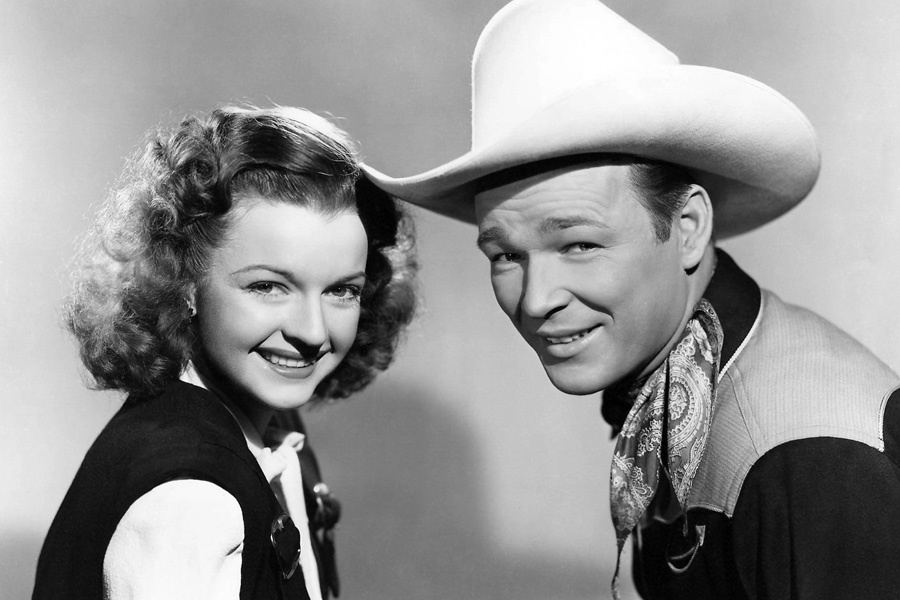
Grace Arlene Wilkins remains a figure of restrained but meaningful historical interest. Her name appears most often beside Roy Rogers, yet that framing is incomplete. She was not merely a spouse in a celebrity narrative. She was the domestic constant during a volatile ascent. Her life, though sparsely documented, carried evident consequence.
Born in 1914, she entered adulthood during a period of economic abrasion and cultural change. That context matters because it shaped the texture of her marriage and motherhood. The 1930s rewarded endurance more than display. Grace seems to have embodied that practical ethic. Her story survives through family memory, scattered references, and the lives her household produced.
Courtship and Marriage in the 1930s
The courtship between Grace Arlene Wilkins and Leonard Franklin Slye, later Roy Rogers, belongs to the era of radio romance and working class perseverance. Popular retellings often soften the origin with a story about pie and a song. Whether treated as lore or lived memory, the tale suits the period. It suggests affection built through small exchanges rather than grand ceremony.
By mid June 1936, the pair married in Roswell, New Mexico. The date is reported as either 11 June or 14 June. That slight ambiguity does not weaken the record. It instead reveals how informal human memory can become over time. The marriage lasted about ten years, which is a substantial span across two demanding lives.
Roy Rogers was becoming a public figure during those years. His professional identity moved steadily from local performance toward national visibility. Grace remained outside the spotlight, but not outside the story. Her presence formed the private counterweight to public momentum. That balance often determines whether fame remains manageable.
Family Life Under Rising Fame
The Rogers household expanded during the early 1940s. That expansion occurred while Roy’s reputation grew larger and more visible. Such circumstances can strain even disciplined families. Grace appears to have provided steadiness inside that pressure. She managed the recurrent burdens of home life while the outside world grew louder.
The family included three children. Cheryl Darlene was adopted around 1941. Linda Lou arrived in the early 1940s. Roy “Dusty” Rogers Jr. was born in November 1946. Each arrival marked a new phase in the family chronology. Each child also deepened the domestic commitment that Grace sustained.
| Year | Family Event | Note |
|---|---|---|
| 1936 | Marriage | Roswell, New Mexico |
| 1941 | Adoption of Cheryl Darlene | Early wartime years |
| 1942 to 1943 | Birth of Linda Lou | Early 1940s period |
| 1946 | Birth of Roy “Dusty” Rogers Jr. | Final months of Grace’s life |
The table only sketches the outline. Real family life is less tidy than chronology. It consists of meals, travel, uncertainty, and repetition. Grace’s role likely demanded all of that, plus emotional tact. Those obligations rarely earn public notice, yet they sustain every visible achievement.
The Cost of Motherhood
Grace’s death in November 1946 altered the family structure irrevocably. She died from postpartum complications shortly after Roy Jr. was born. She was 32. That fact lends the biography its sharpest edge. A life of care ended at the exact moment new life had arrived.
Motherhood in that era carried grave medical risk. Childbirth was far less secure than it later became. A household could be enlarged in one hour and shattered in the next. Grace’s death illustrates that precariousness with painful clarity. The family legacy is therefore inseparable from loss.
Her children grew under the shadow of that absence. Cheryl Darlene, Linda Lou, and Dusty each entered a family transformed by grief. The emotional residue of such a loss does not vanish. It becomes atmospheric. It shapes how stories are told, how names are remembered, and how family identity is inherited.
The Woman Behind the Legend
Grace did not maintain a public career with documented performances or screen credits. That absence should not be mistaken for insignificance. Many historical lives exert force through maintenance rather than spectacle. In households, that force is often decisive. It directs schedules, absorbs pressure, and preserves coherence.
Roy Rogers became an icon of western entertainment. He embodied performance, visibility, and style. Grace occupied a different register. She was the ordinary infrastructure that made extraordinary mobility possible. The contrast is instructive. Fame is rarely self sustaining. It usually depends on someone else keeping the ground stable.
Her marriage to Roy coincided with his most transformative ascent. That timing gives her life a structural importance. She was present during the years when an entertainer became a legend. She helped hold the private domain while the public one expanded. That work is easy to overlook because it leaves few artifacts.
Names and Historical Variation
Historical records do not always preserve her name consistently. Grace Arlene Wilkins is also seen as Grace Arline Wilkins. Both spellings circulate in family recollection and reference material. Such variation is common in older records. It reflects transcription habits, oral memory, and the looseness of informal documentation.
The spelling variance should not be treated as trivial. It shows how identity can become unstable in archival transmission. A person may be deeply important and still lightly recorded. That tension appears throughout her biography. The record is partial, yet the influence is evident.
| Name Form | Usage |
|---|---|
| Grace Arlene Wilkins | Common formal rendering |
| Grace Arline Wilkins | Alternate historical spelling |
| Grace Arlene Wilkins Rogers | Married form |
These variants do not indicate separate identities. They indicate a single life filtered through different memory channels. In family histories, that is common. Names shift while the person remains the same.
Legacy Inside the Rogers Story
Grace’s legacy survives largely through continuity. Her children became part of the larger Rogers family narrative. Roy later married Dale Evans in 1947, and that partnership became iconic in its own right. Yet the earlier household mattered first. It established the emotional and familial foundation that preceded the later fame.
The Rogers story is often told in layers. The public sees the western star and the polished family image. Beneath that surface lies a more ordinary and durable domestic history. Grace belongs to that inner layer. She helped form the family that later became recognizable to the wider culture. Her role was foundational rather than ornamental.
This is why her biography resists easy compression. She was not a performer, but she was central to a performer’s life. She was not a celebrity, but she shaped the conditions that made celebrity sustainable. That distinction matters. It restores proportion to a story often dominated by brighter names.
Chronology and Family Facts
A short chronology helps clarify the sequence of her life.
| Year | Event |
|---|---|
| 1914 | Birth of Grace Arlene Wilkins |
| Early 1930s | Courtship with Roy Rogers begins |
| 1936 | Marriage in Roswell, New Mexico |
| 1941 | Adoption of Cheryl Darlene |
| 1942 to 1943 | Birth of Linda Lou |
| November 1946 | Birth of Roy Jr. |
| 3 November 1946 | Death following childbirth complications |
The family facts are similarly compact. She had one adopted child and two biological children. Her marriage lasted about a decade. Her life ended young, and her death came during childbirth recovery. These are plain facts, but they carry considerable weight. They define the scope of her biography with unusual economy.
Key Takeaways
Grace Arlene Wilkins was the first wife of Roy Rogers and an essential figure in his early family life. She married him in 1936 and remained with him until her death in 1946. Her life centered on homemaking, motherhood, and the steady labor of preserving domestic order during a period of rising public attention.
Her story is marked by three children, including one adoption and two biological births. It is also marked by uncertainty in the historical record, including variation in the spelling of her middle name. That inconsistency does not diminish her importance. It simply reflects the fragility of archival memory.
Grace’s significance lies in what she supported rather than what she performed. She helped sustain a household during Roy Rogers’ ascent to fame. She shaped the family that continued after her death. Her life remains a reminder that some of the most durable historical influence is exercised quietly, inside the home, where it is least likely to be seen and most difficult to replace.